

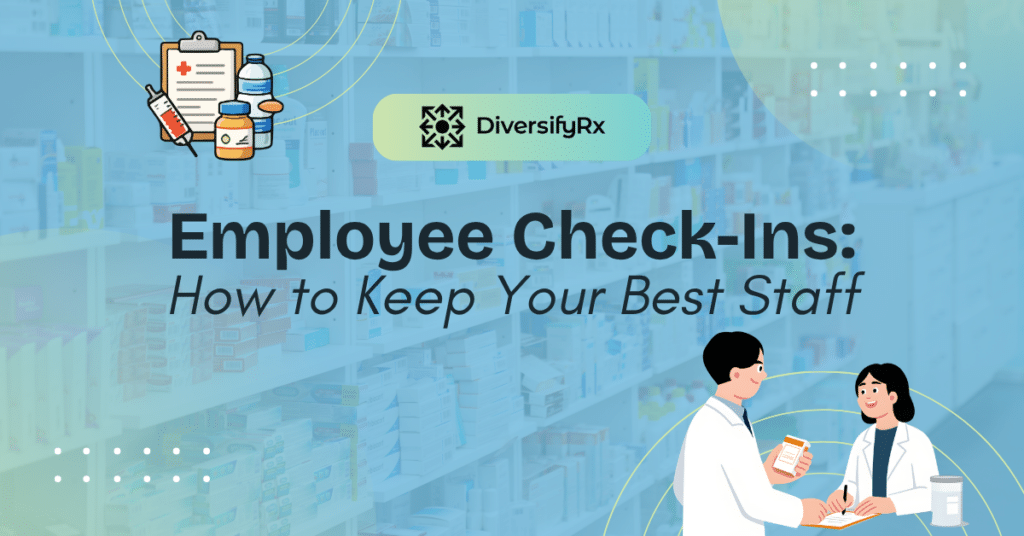

When’s the Last Time You Checked In With Your Team?
Pharmacy employee check-ins are one of those leadership habits everyone knows they should probably do more often.
Let me guess how your last week went.
You were busy.
Phones ringing. Scripts stacking up. Someone called out. Something didn’t come in from the wholesaler. A patient was frustrated. A provider sent something wrong. The printer jammed (because of course it did).
And somewhere in the middle of all that… you meant to check in with your team.
But you didn’t.
Not because you don’t care.
Because you’re busy.
And that’s exactly how good teams slowly start to drift.
What Are Pharmacy Employee Check-Ins?
Pharmacy employee check-ins are short, intentional one-on-one conversations that give employees space to discuss how work is going, what is frustrating them, where they need support, and what could improve. Unlike formal performance reviews, the goal is regular communication before small problems become disengagement or turnover.
Why Pharmacy Employee Check-Ins Matter Before There’s a Problem
Most pharmacy owners don’t wake up one day and think:
“I’m going to neglect my team today.”
That’s not how it happens.
It happens quietly.
You stop having real conversations. It becomes easier to assume things are “fine.” Conversations only really happen when something goes wrong.
And then one day someone gives notice… and you’re caught off guard.
You thought everything was good.
They didn’t.
That gap — between what you think and what your team is actually feeling — is what pharmacy employee check-ins are meant to close.
What a Pharmacy Employee Check-In Actually Is (And Isn’t)
Let’s clear this up, because a lot of people overthink it.
A pharmacy employee check-in is not:
- a performance review
- a lecture
- a rushed conversation between filling scripts
- a “Hey, everything good?” while walking by
That doesn’t count.
A real check-in is simply: a focused, intentional conversation where your employee feels like a human… not just a role.
That’s it. Nothing crazy or stressful.
Why This Matters More Than You Think
This isn’t just a “nice leadership habit.”
It directly impacts:
- employee retention
- team morale
- how your pharmacy feels day-to-day
- and yes… even patient experience
Because here’s the truth: your patients don’t experience you most of the time.
They experience your team.
And if your team feels:
- unheard
- disconnected
- burned out
- frustrated
…it shows.
In fact, I wrote about how this becomes one of the primary reasons that good pharmacy employees stop caring about their work and end up leaving your team.
So when you improve how your team feels, you’re indirectly improving how your patients feel too.
5 Questions to Use During Pharmacy Employee Check-Ins
This doesn’t have to be complicated.
But it does need to be intentional.
A useful pharmacy employee check-in should cover five things: how the employee is doing, what feedback they need, what is happening outside work, what would improve their role, and what they think the pharmacy should fix.
Here’s the 5 questions you can ask during your pharmacy employee check-in to make it WAY more impactful:
1. Start With Them (Not You)
Don’t open with:
“Here’s what I need to talk to you about.”
Start with:
“How are things going for you right now?”
And then — this is the hard part — actually listen.
Not while thinking about the next script.
Not while watching the workflow.
Just… listen.
You’ll be surprised what people will tell you when they feel like you’re actually present.
2. Give Real Feedback (Not Just When Things Go Wrong)
Most employees only get feedback when something is off.
That’s not exactly motivating.
Use pharmacy employee check-ins to talk about:
- what they’re doing well
- where they’re improving
- where they’re struggling
- where they could grow
And keep it real.
Not fluffy.
Not harsh.
Just clear.
People want to know where they stand.
3. Ask About Life (Yes, Actually)
This is where some owners get uncomfortable.
But it matters.
Ask things like:
- “How are things outside of work?”
- “Anything going on I should know about?”
You’re not trying to pry.
You’re trying to understand.
Because when someone is distracted, stressed, or going through something personally, it shows up at work whether you acknowledge it or not.
Better to know.
4. Talk About What They Want (Not Just What You Need)
This one gets missed a lot.
Ask:
- “Is your schedule working for you?”
- “Anything you’d want to adjust if you could?”
- “What would make your role easier or better?”
You’re not promising everything.
But asking shows you care.
And sometimes small adjustments make a big difference in retention.
5. Ask for Suggestions (And Mean It)
Your team sees things you don’t.
They deal with:
- patient frustrations
- workflow bottlenecks
- communication breakdowns
During your pharmacy employee check-in, ask:
“What’s one thing we could do better?”
Then don’t get defensive.
Even if you disagree.
Because the goal isn’t to win the conversation.
It’s to understand what they’re experiencing.
How Often Should Pharmacy Owners Check In With Employees?
Right now is actually a great time to do this.
Q1 chaos is behind you.
Summer is coming (hello vacations and schedule changes).
This is the window where you can reset before things get messy again.
If you wait until things are stressful, these conversations get harder.
If you do them now, they get easier.
The Real Reason Most Owners Avoid Pharmacy Employee Check-Ins
Let’s be honest.
It’s not because you don’t care.
It’s because:
- it takes time
- it can feel awkward
- you’re not sure what’s going to come up
- you’re already stretched thin
But here’s the trade-off:
You either invest time proactively…
Or you spend a lot more time later dealing with:
- turnover
- hiring
- training
- frustration
- and a team that slowly disengages
One of those paths is easier.
Consistent Pharmacy Employee Check-Ins Help Good People Stay
You don’t need a perfect system to do this well.
You just need to show up.
Have the conversation. Be present. Be honest. Listen more than you talk.
That alone will put you ahead of most pharmacy owners.
Because at the end of the day…
Your pharmacy runs on people.
And people tend to stay where they feel seen, heard, and valued.