


Category 1 Peptides: What FDA’s Meeting Means for Pharmacies
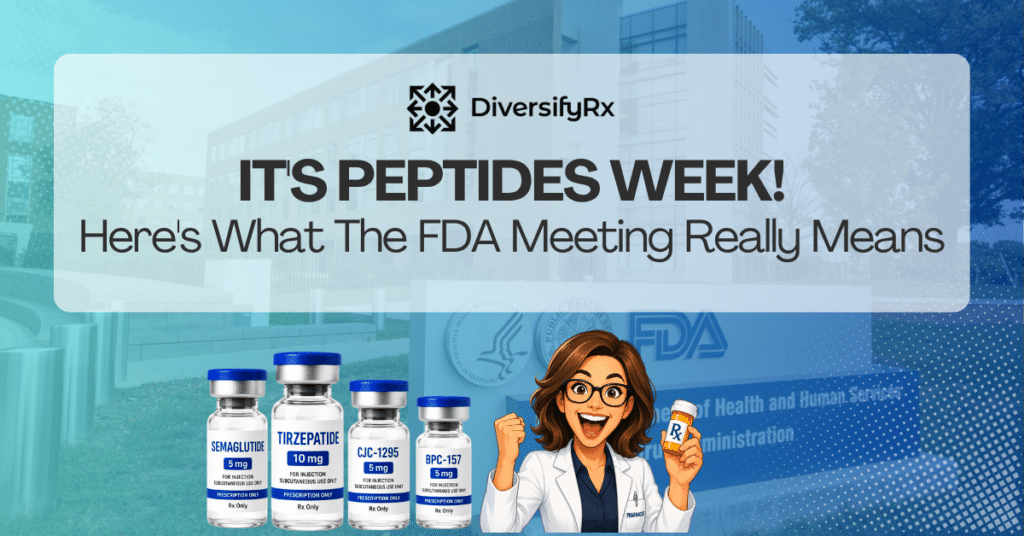
Category 1 peptides are back in the spotlight as the FDA’s Pharmacy Compounding Advisory Committee (PCAC) meets July 23–24 to review seven peptides for potential inclusion on the FDA’s Category 1 list, including BPC-157, KPV, TB-500, MOTS-c, Semax, Epitalon, and Emideltide (DSIP). A second meeting is already scheduled before the end of February 2027 to review five additional peptides, including GHK-Cu and LL-37.
Category 1 peptides are bulk drug substances being evaluated through the FDA’s formal rulemaking process for potential use in pharmacy compounding. A favorable recommendation from the Pharmacy Compounding Advisory Committee (PCAC) is an important milestone, but pharmacies should wait for the FDA’s completed rulemaking process before assuming routine compounding is permitted.
Naturally, pharmacy owners have one big question:
“What happens if they approve them?”
It’s a fair question.
But I actually think there’s a better one.
“What should my pharmacy be doing right now, regardless of what happens?”
Because while everyone else is refreshing the FDA website waiting for headlines, the pharmacies that ultimately win will be the ones that are preparing—not waiting.
One of the best ways you can start preparing is by helping your team get ready to start selling peptides. Here’s a blog article that explains how you can start preparing your team to take advantage of this peptides opportunity.
Let’s talk about what this meeting actually means.
Why Everyone Is Watching This Meeting
For years, many peptides have existed in a regulatory gray area.
Earlier this year, the FDA removed 11 peptides from Category 2, where substances were considered to have significant safety concerns, so they could finally be evaluated by the PCAC. That decision was encouraging, but it’s important to understand what it did—and didn’t—mean.
Removal from Category 2 did not authorize pharmacies to begin compounding these peptides.
Instead, it simply opened the door for scientific review.
If the committee recommends a peptide for Category 1, that’s certainly positive news. But it isn’t the finish line.
The FDA must still complete the rule-making process and publish the official Category 1 list before enforcement discretion generally applies. Until then, pharmacies should continue following current regulations and work closely with qualified legal and compliance counsel before making operational decisions.
In other words…
Don’t confuse progress with permission.
What Happens If Category 1 Peptides Move Forward?
Honestly?
There will probably be a lot of excitement.
- You’ll see webinars.
- Social media posts.
- Industry emails.
- Vendor announcements.
Everyone will be talking about what the meeting means.
That’s understandable.
But here’s what I wouldn’t do: I wouldn’t start compounding these peptides Friday afternoon just because the committee voted favorably.
A positive recommendation is an important milestone, but it’s still only one step in a larger regulatory process. The official published Category 1 peptides list is what ultimately matters.
Patience isn’t always exciting.
But it’s usually profitable.
What If Category 1 Peptides Aren’t Recommended?
This might surprise you…
It doesn’t change the long-term opportunity nearly as much as many people think.
Patients aren’t suddenly going to stop asking about regenerative medicine, healthy aging, recovery, metabolic health, or cognitive performance because of one committee meeting.
The demand is still there. Research continues. Innovation continues. The science continues to evolve.The timeline may change.
Your long-term business opportunity doesn’t.
That’s why I don’t believe independent pharmacies should build their entire strategy around a single FDA meeting.
Build it around serving patients well.
How Pharmacies Should Prepare for Category 1 Peptides
This is the part that actually matters.
Instead of obsessing over every headline this week, focus on preparing your pharmacy so you’re ready when opportunities become available.
If You’re a Compounding Pharmacy…
Now is the time to prepare, not scramble.
That means:
- Reviewing and finalizing your peptide formulations and SOPs.
- Training your pharmacists and staff so everyone understands how to confidently answer patient questions.
- Creating compliant patient education materials.
- Building physician education packets and outreach strategies. Here’s a blog article that will show you how to get started with this quickly.
- Preparing your marketing so you’re ready when regulations allow.
One of the biggest mistakes I see is pharmacies waiting until they’re legally able to offer a service before they begin educating their team or creating marketing materials.
By then, you’re already behind.
Good news for our Pharmacy Badass University members—we’ve already created many of these resources to help you hit the ground running.
If You’re NOT a Compounding Pharmacy…
You’re not out of the game.
Far from it.
In fact, this is the perfect time to begin establishing relationships with trusted compounding partners.
If you don’t currently compound peptides yourself, start opening accounts with reputable 503B outsourcing facilities like Olympia Pharmaceuticals and Empower Pharmacy, as well as trusted 503A partners like Boothwyn Pharmacy.
Building these relationships now means you won’t be trying to figure everything out after patient demand starts increasing.
Preparation creates options.
Waiting limits them.
Don’t Repeat the CBD Mistake
I’ve seen this before.
When CBD exploded onto the market, many pharmacies assumed all they needed to do was order products.
So they filled their shelves…
…and waited.
Unfortunately, patients didn’t magically appear.
The pharmacies that actually succeeded did something very different.
- They educated their community.
- They trained their staff.
- They built relationships with providers.
- They answered patient questions before patients even knew what to ask.
In other words…
They became trusted experts—not just retailers.
I believe peptides present an even bigger opportunity, but the same lesson applies.
Inventory doesn’t create revenue. Trust does.
Compliance Still Matters
One thing I don’t want pharmacy owners to overlook is that FDA enforcement hasn’t slowed down while all this excitement has been building.
If anything, it’s increased.
The FDA has continued tightening oversight in several areas, including:
- Bulk drug sourcing for compounded medications.
- GLP-1 compounding following the resolution of national shortages.
- Marketing claims related to compounded metabolic therapies and peptides.
- Telehealth prescribing relationships.
- Prescription verification requirements.
- State-level inspections and enforcement.
We’ve also seen dozens of warning letters issued against companies making misleading marketing claims.
That’s why your peptide strategy shouldn’t just be profitable.
It should also be compliant.
Independent pharmacy has always succeeded by playing the long game.
This is no different.
The Real Opportunity Behind Category 1 Peptides
I’ve owned pharmacies long enough to know that the businesses that consistently win aren’t usually the ones that react the fastest.
They’re the ones that prepare the smartest.
This week’s FDA meeting is important. It will certainly shape conversations throughout our industry.
But don’t spend all your energy watching the news.
Spend it building the systems, relationships, education, and marketing that will allow your pharmacy to serve patients confidently when the time comes.
Because when opportunity finally arrives, you don’t want to be getting ready.
You want to already be ready.
Ready to Build Your Peptide Strategy?
Whether you’re planning to compound peptides yourself or partner with trusted 503A and 503B providers, success requires far more than simply ordering products. It takes the right education, the right systems, and the right partners.
Inside Pharmacy Badass University, our members receive peptide marketing campaigns, physician education resources, patient handouts, implementation guides, AI-powered marketing tools, and practical strategies to help build a compliant and profitable peptide program.
If you’re looking for trusted peptide partners, we strongly recommend working with companies we’ve thoroughly vetted and use ourselves. For 503B outsourcing, Olympia Pharmaceuticals and Empower Pharmacy continue to be excellent partners for independent pharmacies looking to expand their peptide offerings. If you’re exploring 503A compounding, Boothwyn Pharmacy has been a trusted resource for many pharmacy owners navigating this growing market.
One of the biggest benefits of being a PBU member is that you don’t have to figure it all out on your own. In addition to implementation support, our members receive exclusive pricing and discounts with many of our preferred vendor partners, including peptide suppliers and compounding resources. Those savings often offset a significant portion of the cost of membership while giving you access to partners you can trust.
And if you’re ready to accelerate your peptide program even further, join us for our upcoming Peptides Workshop, where we’ll walk through the latest regulatory updates, clinical applications, marketing strategies, operational systems, and implementation roadmap to help your pharmacy confidently capitalize on this rapidly evolving opportunity.
Frequently Asked Questions About Category 1 Peptides
Can pharmacies compound Category 1 peptides today?
No. A favorable recommendation from the Pharmacy Compounding Advisory Committee does not automatically authorize pharmacies to begin compounding these peptides. The FDA must still complete the formal rulemaking process before enforcement policies change.
Does the PCAC approve peptides?
No. The committee provides scientific recommendations to the FDA. Final regulatory decisions remain with the FDA through the federal rulemaking process.
Why are Category 1 peptides important?
Category 1 peptides may eventually become eligible for pharmacy compounding once the FDA completes its review. For independent pharmacies, that could create new opportunities to expand clinical services and cash-pay revenue while remaining compliant with federal regulations.
What should pharmacies do while waiting?
Rather than waiting for regulatory decisions, pharmacies should prepare their staff, marketing, physician relationships, compliance processes, and operational systems so they’re ready when opportunities become available.